Why Density Matching Decides Between Obvious And Natural-Looking Hair Extensions Dallas Guests Notice
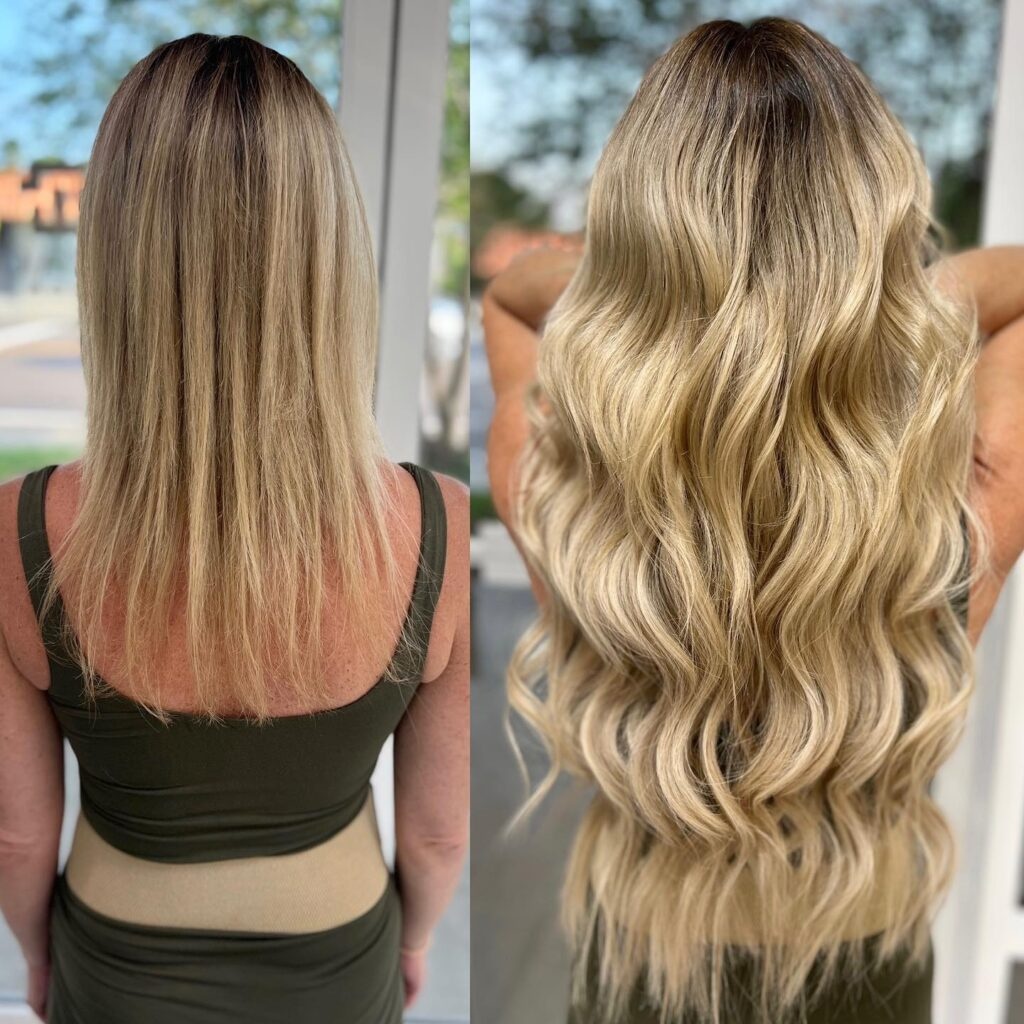
Most people can spot bad extensions instantly. A patch that sits too thick against thin hair, a row that shows when the wind lifts it, a section darker or heavier than everything around it. The giveaway is rarely the hair quality. It is a match. Density matching is the quiet skill behind natural-looking hair extensions Dallas guests barely register as extensions at all.
What Density Matching Actually Means
Density is how much hair occupies a given area. Everyone has natural variation across the head, fuller at the back, lighter at the temples, thinner along the part. Matched density means the added hair mirrors that pattern instead of fighting it.
When density is expertly matched, the extension picks up exactly where your hair leaves off. When it is not, you get a visible step between where natural hair ends and added hair begins. That step is what the eye catches, and no amount of expensive hair hides it.
Why Volume Without Matching Backfires
Adding a large amount of hair to fine or thinning areas seems like the obvious move. It usually reads as the most obvious of all, but fine hair cannot visually support a heavy block of added volume, so the contrast announces itself the moment light hits it.
Good matching works in the opposite direction. It distributes added hair to blend with the gradient your head already has, building fullness without creating a hard line. This is the core of natural-looking hair extensions Dallas specialists aim for: not maximum hair, but balanced hair that moves as one piece with your own.
The Elements A Specialist Matches
Density is one layer. A convincing blend depends on several factors lining up together:
- Density gradient: matching the fuller-to-finer pattern across your head.
- Color blend: layering tones rather than using one flat shade, since real hair is never a single color.
- Hair caliber: pairing the thickness of added strands to your own so they move alike.
- Placement: positioning rows and bonds where they stay hidden as hair moves.
Remy hair helps here. Remy is human hair with the cuticles kept intact and aligned in one direction, so it behaves like your own and reflects light the same way.
Why Method Selection Is Part OF THE Match
Different attachment methods suit different densities. Hand-tied wefts and Genius Wefts, which are ultra-thin flexible tracks of hair, lie flat and suit finer hair. Keratin Fusion extensions, bonded strand by strand with heat-activated keratin, allow precise placement across uneven density. NBR, or Natural Beaded Rows, builds rows on a hand-tied track for a flat, blended result.
Choosing among them is a matching decision too. The method that produces custom hair extensions Dallas women keep coming back for depends on the density it has to disappear into. A method that flatters thick hair can betray fine hair, which is why no single technique is the right answer for everyone.
What Customization Adds
Off-the-shelf hair comes in fixed weights, lengths, and a limited band of colors. Your head does not. The value of custom hair extensions Dallas salons build comes from adjusting all of those variables to your actual hair: cutting weft length to your density map and placing attachments where your hair can hold them without strain.
This is also where comfort and longevity come from. Hair matched and placed for your specific head sits more naturally and lasts longer, because nothing is fighting against the way your hair already grows.
The Result You Are Paying For
The goal of extensions is not for anyone to know you are wearing them. That outcome rests less on the hair itself and more on how precisely it is matched to what you already have. Two guests can receive the same grade of hair and walk out with completely different results, and the difference is almost always the quality of the match.
Density matching is invisible by design. When it is done right, there is nothing to notice, which is exactly the point. For anyone weighing extensions, the question to ask a stylist is not how much hair they will add, but how they plan to match it to what is already there. The answer reveals quickly if you are sitting with someone who understands that blending, not bulk, is what makes added hair believable.
Type a comment
Latest comments
No comments so far. Be the first to comment!
Similar articles